The relationship between air quality and health is now one of the most relevant topics in the fields of environmental protection and public health. Air pollution is, in fact, a recognized risk factor for numerous respiratory, cardiovascular, and systemic diseases, with effects that may occur both in the short and long term.
Every day, millions of people are exposed to pollutants present in the air they breathe, both outdoors and indoors. Growing attention to the effects of air pollution has led institutions, the scientific community, and companies to invest in increasingly advanced monitoring systems to better understand the risks associated with exposure to pollutants.
In this article:
- we will analyze the main air pollutants and their sources
- we will illustrate the immediate health effects and the chronic consequences of prolonged exposure
- we will explore the strategic role of environmental monitoring and air pollution prevention activities in protecting public health
Why air quality is a public health issue
Air quality refers to the level of atmospheric purity and the concentration of substances present in the environment. When discussing indoor and outdoor air quality, we refer respectively to air in enclosed environments (homes, offices, schools, etc.) and to ambient outdoor air.
The presence of air pollutants at high concentrations can compromise well-being and increase the risk of developing various pollution-related diseases. Numerous scientific studies have shown that continuous exposure to particulate matter, toxic gases, and chemical compounds can negatively affect respiratory health, the cardiovascular system, and metabolism.
The importance of this issue is recognized internationally. The World Health Organization (WHO) considers air pollution one of the main environmental risks to human health. The European Environment Agency (EEA) monitors the effects of pollution on the European population through periodic reports, while the United States Environmental Protection Agency (U.S. EPA) develops guidelines, monitoring methodologies, and assessment tools used as global references. Evidence gathered by these organizations confirms the strong relationship between air quality and health and highlights the need to reduce population exposure to air pollutants.
Main air pollutants and their sources
Among the most monitored and studied pollutants are:
- Particulate matter (PM10 and PM2.5), the so‑called “fine particles,” which represents one of the main health concerns, as these particles, especially the finer PM2.5 fraction, can penetrate deep into the lungs and reach the bloodstream.
- Nitrogen dioxide (NO₂), mainly associated with emissions from road traffic and industrial processes.
- Tropospheric ozone (O₃), a secondary pollutant formed through photochemical reactions (activated by solar radiation) involving other pollutants known as precursors.
- Sulfur dioxide (SO₂), whose concentrations in the air have significantly decreased in recent years as a result of policies regulating sulfur content in fossil fuels.
- Carbon monoxide (CO) and volatile organic compounds (VOCs), mainly originating from industrial combustion, energy production, and the use of solvents.
Alongside traditional pollutants, research is increasingly focusing on emerging contaminants and substances of particular scientific interest, such as nanoparticles, PFAS, glyphosate, BTX/BTH compounds, and carbonaceous aerosols (especially black carbon), whose distribution and effects on health and climate are the subject of extensive studies and monitoring programs.
The main sources of air pollution include:
- road traffic
- industrial activities
- domestic heating systems and residential combustion
- natural sources, such as wildfires, volcanic eruptions, and desert dust transport phenomena, which can contribute to atmospheric particulate concentrations
Short term health impacts
Gli effetti dell’esposizione a elevate concentrazioni di inquinanti possono manifestarsi The effects of exposure to high concentrations of pollutants can occur rapidly, especially during episodes of severe smog or when daily regulatory limits are exceeded.
The main short-term effects of air pollution include:
- irritation of the respiratory tract
- eye irritation
- cough
- nasal congestion
- fatigue
- asthma and breathing difficulties
- headaches and general tiredness
The most vulnerable groups are children, the elderly, and individuals suffering from respiratory or cardiovascular diseases. For these populations, even short exposure periods can lead to significant health consequences and require medical intervention.
Long term health impacts
Epidemiological studies confirm that prolonged exposure to air pollution is associated with numerous chronic diseases.
- Long-term exposure to environments with high concentrations of particulate matter and pollutant gases can contribute to the development of chronic obstructive pulmonary disease (COPD), chronic asthma, and other respiratory conditions.
- Extensive scientific evidence links pollutant exposure to increased cardiovascular risk, including higher likelihood of developing hypertension, heart attack, stroke, and other circulatory system disorders.
- Several studies have also identified a correlation between chronic exposure to certain pollutants and increased cancer risk, particularly lung cancer. At the same time, a progressive decline in lung function and greater susceptibility to respiratory infections have been observed.
Reports published by WHO, EEA, and EPA confirm that air pollution contributes to reduced life expectancy and generates significant healthcare costs for both public and private systems, making prevention and control activities increasingly strategic.
Air quality monitoring and prevention
Air quality monitoring is a fundamental tool for identifying emission sources, assessing population exposure, and supporting decision-making in environmental and public health protection.
Monitoring activities are carried out through networks of environmental monitoring stations distributed across the territory, capable of measuring pollutant concentrations in real time. The collected data feed into synthetic indicators such as the Air Quality Index (AQI), which, in its various definitions, aims to communicate in a simple and immediate way the level of risk associated with atmospheric conditions.
Public monitoring networks and the increasing availability of open data allow citizens, administrations, and businesses to access up-to-date and reliable information, fostering greater awareness of exposure levels. Continuous monitoring is essential for promptly identifying critical situations, assessing the effectiveness of environmental policies, and protecting the health of the most vulnerable population groups.
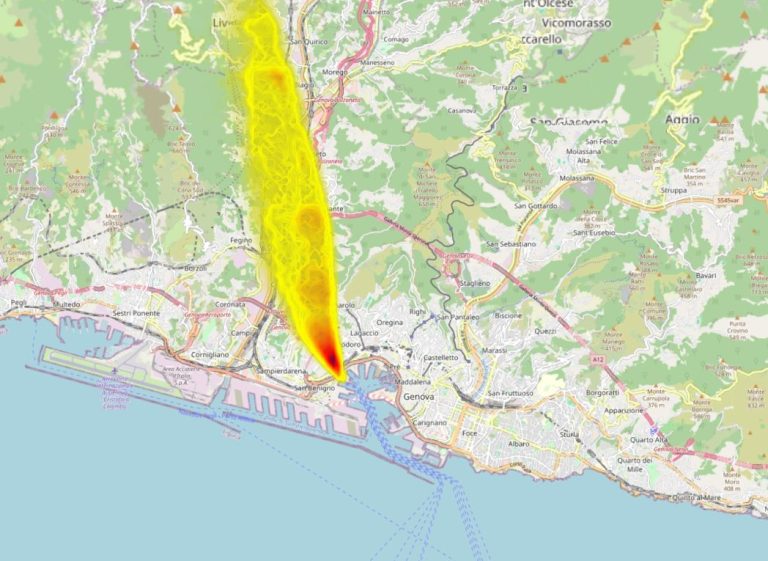
To meet these needs, PM_TEN has developed the DigitalPlant platform, integrating environmental monitoring and predictive simulations for scenario assessment and decision support.
In terms of air pollution prevention, the most effective strategies include:
- the adoption of public policies aimed at reducing emissions
- improving energy efficiency
- promoting sustainable mobility
- controlling industrial emissions
Individual behavior can also contribute to risk reduction. On days with high pollution levels, it is advisable to limit outdoor physical activities during peak hours, regularly monitor available data, and adopt preventive measures to protect respiratory health. At the same time, conscious choices by citizens, such as adopting sustainable practices, can play a decisive role in improving air quality, especially in urban areas.
Investing in environmental monitoring, technological innovation, and public awareness means actively contributing to the creation of healthier and more sustainable environments, where air quality becomes a central element in protecting public health.