
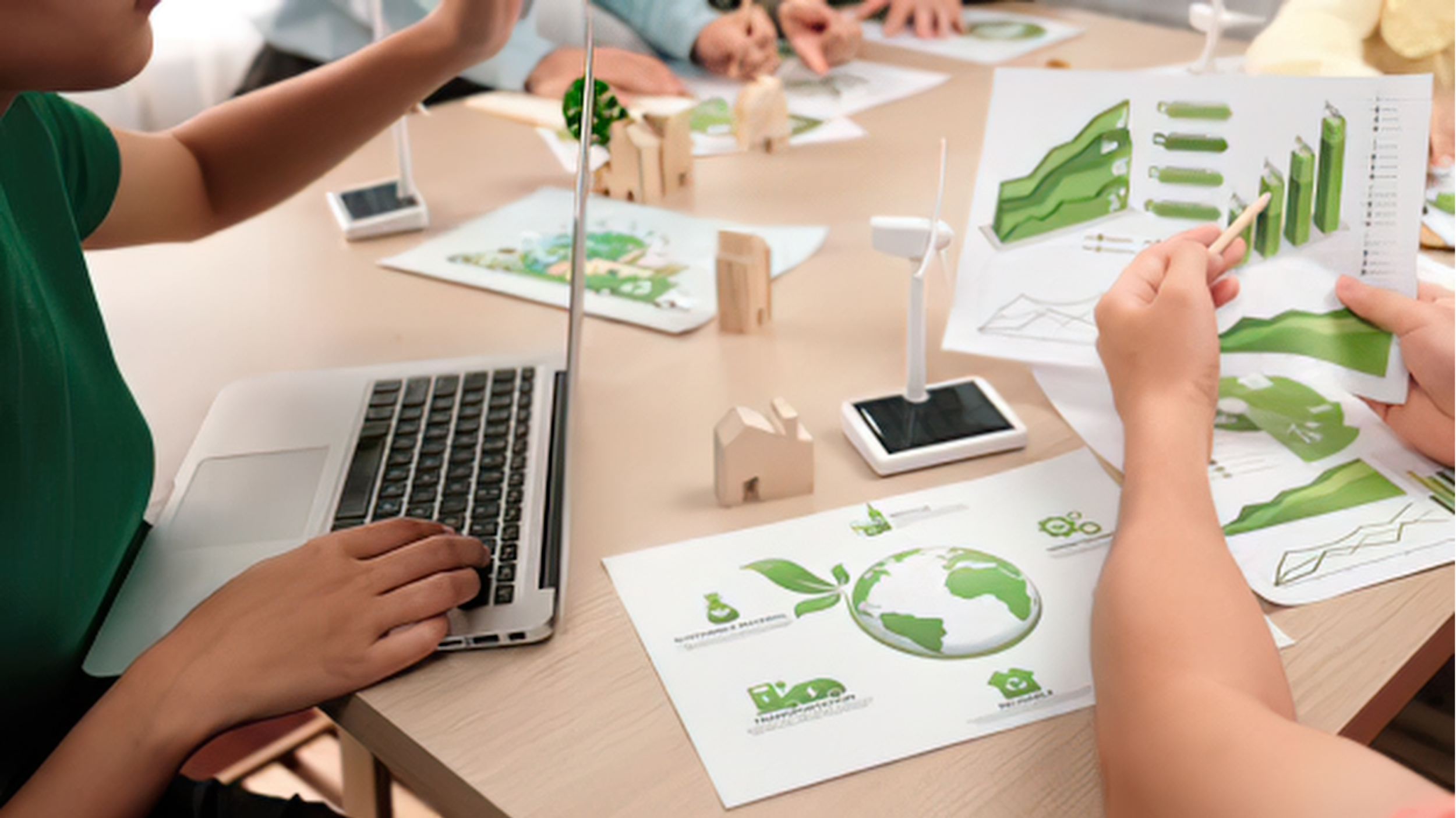
Environmental education is an educational pathway that helps people understand how the environment works, the challenges related to sustainability, and the role everyone can play in protecting their local area. Today, it is not only about acquiring knowledge, but also about developing skills, awareness, and the ability to take concrete action on issues such as climate change, biodiversity loss, and pollution.
In this context, citizen science is one of the most effective tools for turning theory into hands-on experience. Through observation and data collection activities, citizens, including students, are not merely recipients of environmental education but become active participants in understanding and monitoring the environment around them.
What is environmental education?
Environmental education was established with the goal of promoting greater awareness of the relationship between human activities and the environment, encouraging responsible and sustainable behaviours. Over time, the concept has evolved from a predominantly ecological focus to a broader perspective that also includes the social, economic, and cultural dimensions of sustainable development.
Although they are often used interchangeably, environmental education, civic education, and sustainability education have distinct meanings. Environmental education primarily focuses on the relationship between people and the environment; civic education encourages active participation in community life; and sustainability education integrates the environmental, social, and economic dimensions of development.
The importance of these topics is also recognised by UNESCO and the United Nations Agenda 2030, which identify education as one of the key tools for achieving the Sustainable Development Goals (SDGs), particularly through Target 4.7, which focuses on education for sustainable development and global citizenship.
Why is environmental education important and what are its objectives?
The environmental challenges of our time require informed and aware citizens. Climate change, biodiversity loss, air quality, natural resource management, and ecosystem protection are all issues that directly affect our daily lives.
Environmental education therefore aims to foster a deeper understanding of environmental phenomena and encourage the adoption of responsible and sustainable behaviours. At the same time, it promotes critical thinking and the ability to analyse complex issues, stimulates active participation in community life, and contributes to increasing environmental awareness at both the local and global levels.
In this context, environmental education in primary schools plays a particularly important role, as it helps build awareness of the relationship between human activities and the environment from an early age, encouraging responsible attitudes that can accompany students throughout their lives.
According to the approach promoted by UNESCO, learning should not be limited to theoretical knowledge but should also involve social, emotional, and behavioural dimensions, enabling individuals to turn awareness into concrete action.
Methods and tools for environmental education
The effectiveness of environmental education depends largely on the methods used to promote it. Activities based on experiential learning and direct participation help students better understand observed phenomena than purely theoretical teaching approaches.
Among the most widely used methods are hands-on workshops, field activities, and direct observation of the local environment, all of which help transform theoretical concepts into practical experiences. The direct use of measurement instruments, sensors, and digital data collection platforms also encourages active participation and engagement with real environmental challenges.
For teachers, educators, and associations, it is often useful to start with topics that are closely related to students’ everyday experiences, such as air quality, waste management, or urban biodiversity. Among the most effective approaches is citizen science, which allows students to become active participants in environmental observation and monitoring activities.
Citizen Science in schools: when students collect the data
Citizen science is a participatory approach through which non-specialist citizens contribute to the observation, collection, and, in some cases, analysis of data that can support scientific research.
Schools provide an ideal setting for this type of activity. Students can learn how to formulate hypotheses, take measurements, analyse results, and understand the scientific method through hands-on experiences. Bringing citizen science into schools means transforming learning into a participatory activity that connects theoretical knowledge with real-world issues affecting local communities.
What data can students collect and what tools can they use?
The possibilities are numerous and cover a wide range of environmental topics, including:
- air quality monitoring;
- biodiversity observation;
- water quality assessment;
- monitoring weather and climate-related phenomena;
- mapping waste and sources of environmental contamination.
Depending on the project, a variety of tools may be used, including environmental sensors, digital applications, meteorological instruments, water analysis kits, species identification guides, or simple data collection protocols.
From educational data to scientific data
One of the most interesting aspects of citizen science concerns the quality of the data collected.
Students can become familiar with concepts such as instrument calibration, comparison with reference stations, and data quality control. These elements are not only technical requirements but also valuable components of the learning experience. Understanding that a measurement can be influenced by the instrument used, operating conditions, or sampling errors helps students develop a more critical and scientifically informed perspective.
Environmental education projects and Citizen Science: practical examples
In recent years, numerous environmental education and citizen science projects have emerged around the world. Examples include initiatives focused on biodiversity monitoring, migratory bird observation programmes, meteorological monitoring networks, and data collection projects related to air quality and environmental conditions.
These experiences demonstrate how collaboration among researchers, schools, and local communities can generate both educational and scientific benefits.
Case Study: AirQuality@School, bringing air quality into the classroom
A practical example of environmental education is AirQuality@School, a project developed by PM_TEN to introduce students to the topics of air quality and environmental monitoring. The initiative demonstrates how environmental education projects in primary schools can transform complex topics into engaging and accessible learning opportunities.
The project was designed to make concepts that are often perceived as complex easier to understand through practical activities and classroom discussions. During the workshops, students had the opportunity to explore air quality issues through simple experiments and interactive activities. This experience helped them gain a better understanding of the main sources of air pollution and reflect on the impact that everyday choices can have on the environment.
Where can schools start, and what role does everyone play?
Taking part in an environmental education project means developing skills that go far beyond traditional curriculum subjects. Students learn how to observe their surroundings, formulate hypotheses, take measurements, interpret results, and understand the value of uncertainty and error as part of the scientific process.
To launch an initiative of this kind, a school can start by identifying an environmental issue relevant to its local area and develop dedicated activities, either independently or by joining existing projects. Collaboration with research institutions, universities, and specialised organisations can provide valuable support, while involving students, families, and the local community can strengthen both the educational effectiveness of the project and its impact on the territory.
Promoting environmental culture requires the contribution of everyone. Schools, families, research institutions, public administrations, and businesses can work together to create educational pathways that foster awareness and participation.
Within this process, organisations such as PM_TEN can support outreach, monitoring, and training activities by providing technical expertise and tools that help bring younger generations closer to environmental and sustainability issues.
Frequently Asked Questions
What Is the Difference Between Citizen Science and Environmental Education?
Environmental education aims to develop knowledge, skills, and awareness related to environmental and sustainability issues. Citizen science, on the other hand, is a practical approach that actively involves citizens, including students, in collecting and observing data to better understand environmental phenomena. The two are closely connected, as citizen science can be an effective tool for making environmental education more concrete and participatory.
Can Students Collect Scientifically Useful Data?
Yes, provided that the activities follow appropriate protocols and are supported by teachers, researchers, or subject-matter experts. Schools can collect observations and measurements that contribute to monitoring local environments and exploring topics such as air quality, biodiversity, and climate-related phenomena. In addition to their scientific value, these experiences help students understand the scientific method and the importance of data quality.
How Can a School Participate in an Environmental Education or Citizen Science Project?
A school can join existing initiatives promoted by research institutions, universities, associations, or organisations specialising in environmental monitoring. Alternatively, it can develop its own projects based on issues affecting the local area, involving students, families, and the wider community. Collaborating with external partners also provides access to expertise, tools, and resources that can make activities more effective and engaging.